Written by Explore Digital
Raising your ad budget feels like the obvious move when you want more leads.
But an advertising budget increase does not fix weak ads, a confusing website, or a messy follow-up process. It just makes the problems bigger.
So how do you know when to increase your advertising budget without wasting money?
Use this simple rule:
Increase spend when your ads are already working, your site is doing its job, and you can track what is happening.
If one of those pieces is missing, fix that first.
Sign 1: Your Ads Are Already Working And Staying Steady
Before you raise your advertising budget, you want proof that what you have is not a fluke.
You don’t need perfect numbers. You need stable performance. Consistency matters more than one good week because it tells platforms like Google and Meta you can handle more spend without performance dropping.
Here are a few plain signs your paid advertising strategy is in a good place.
What “working” looks like
- You are getting leads you would actually want to call back
- Your cost per lead is within a range you can afford, and profitable
- You’re consistently getting sales from your ad leads/traffic
- You are seeing results week after week, not just one good day
- Your ads are not relying on one lucky keyword or one random post
If your results swing wildly every few days, you don’t have a scaling problem. You have a consistency problem.
A quick gut check
Ask yourself this.
“If we doubled leads next month, would we be happy with the quality and can we convert them to sales?”
If the answer is yes, that’s a good sign you can scale paid ads.
Sign 2: Your Website Turns Clicks Into Leads
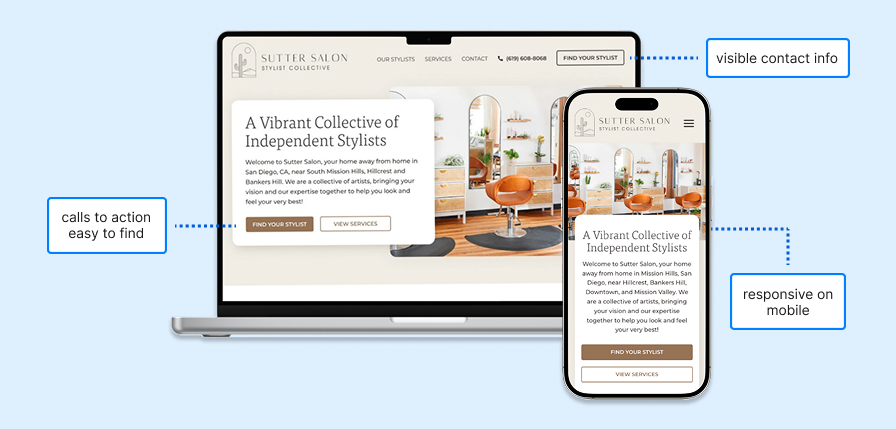
More ad spend only helps if your website can convert the traffic.
This is where a lot of businesses get stuck. They do a Google Ads budget increase, clicks go up, and leads barely move. That’s usually not an ad problem. It’s a website problem.
What to look for on your site
Your site doesn’t need to be fancy. It needs to be clear.
- Your page loads fast on mobile
- Your main service is obvious in the first few seconds
- Your call to action is easy to find
- Your form is short and works on phones
- Your contact info is visible and clickable
If you want the fastest wins before you spend more, start with conversion rate optimization. We do this work daily, and it often makes the same budget perform better.
A simple math example
Let’s say you’re paying $10 per click. You get 100 clicks for $1,000.
If your site converts at 1 percent, that’s 1 lead.
If your site converts at 3 percent, that’s 3 leads.
Same traffic. Same spend. Different results.
That’s conversion rate optimization in real life. You get more out of what you’re already paying for.
(Ideally, we’re looking for a minimum rate of 5-7%)
If your site feels dated, slow, or confusing, fix that before you scale. A strong build makes every channel work harder.
Sign 3: You Are Limited By Budget, Not Demand
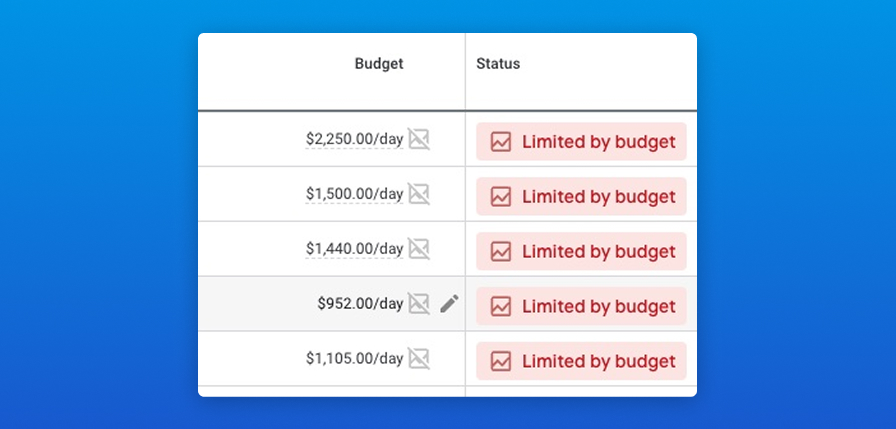
Sometimes the problem really is budget.
Your ads are working. Your site converts. You’re just not showing up enough.
This is one of the clearest signs of when to increase your advertising budget.
What “budget limited” looks like
- Your ads run out early in the day
- You see “limited by budget” warnings in your ad account
- You are not showing for searches you should be showing for
- Your best campaigns are capped, even though they are profitable
In plain terms, you have demand. You’re just not buying enough access to it.
In this case, raising the budget is not a gamble. The budget increase simply gives a working system room to breathe.
It helps you show up more often. It helps you stay visible later in the day. It helps you stop losing good prospects to the competitor who kept spending when you stopped.
What to avoid
Don’t raise spend across everything.
Start with what’s already performing.
Put more of your budget behind the campaigns that bring in the right leads at a cost that makes sense. That's the difference between smart marketing budget planning and just spending more because you feel stuck.
Sign 4: Your Business Can Handle More Leads

This is the part most people skip.
A Facebook ads budget scaling plan can bring leads fast. So can Google. But if your team can’t respond quickly, those leads rot. Then you think your ads aren’t working, when the real issue is follow-up.
Check your lead handling before you scale
- Who answers new leads
- How fast you respond
- What happens after hours
- What happens if the first call goes to voicemail
- Whether you have a simple process for booking the next step
If you’re not sure, look at your last 20 leads:
- How many got a response within 10 minutes?
- How many got a response the same day?
- How many booked?
If this is messy, fix it before you spend more. Otherwise, you’re paying to create chaos.
Sign 5: You Can Track What’s Working
If you can’t track, you can’t learn. And if you can’t learn, scaling becomes expensive guesswork.
This is the quiet difference between a real paid advertising strategy and random spending.
Make sure these basics are true
- Forms are tracked
- Calls are tracked
- Your thank-you page loads after form submissions
- Your lead source data is not missing or broken
- Your links are tagged so you know what drove what
If you’re asking “where did these leads come from” every month, pause the budget increase and fix tracking first.
The Simple Way To Decide
If you want a quick decision filter, use this.
Raise your ad budget when these five things are true:
- Ads are steady and bringing in leads you want
- Your website converts traffic into inquiries
- You are budget limited, not demand limited
- You can handle more leads fast
- Tracking is clean enough to trust
If you’re missing one, fix that first. Then scale.
Ready to talk it through?
Raising your advertising budget should be a strategic move backed by real performance data, not a reaction to slow growth or outside pressure.
Explore Digital helps businesses identify when their ads, website, and funnel are truly ready to scale, so increased spend leads to real results instead of wasted budget. Book a call and we’ll tell you, straight up, whether it’s time to raise your advertising budget or time to tighten the foundation first.
Frequently Asked Questions
1) How much should I raise my advertising budget by?
Start small. A 10 to 20 percent increase is usually enough to learn without blowing things up. If performance holds, you can step up again.
2) If I raise my budget, how fast should results improve?
You should see more volume quickly, often within days. Quality and cost can take a couple of weeks to settle as the platforms adjust to the new spend.
3) Is it better to raise the budget or improve the conversion rate?
If your site is under-converting, improve conversion rate first. It’s the safer way to get more leads without paying for more clicks.
4) What is the biggest mistake businesses make when scaling ads?
They scale broken systems. Weak tracking, slow follow-up, and unclear landing pages get amplified when spend goes up.
5) How do I know if my Google Ads budget increase is working?
You should see more qualified leads at a cost you can afford. If leads go up but quality drops hard, your targeting or landing page is off.
6) What about Facebook ads budget scaling for local services?
It works well when you have strong creatives and a clear offer. It also needs tight follow-up since many leads come from mobile and respond best to fast replies.
7) What metrics matter most for ad spend optimization?
Cost per lead and lead quality are the big ones. Also watch conversion rate on your landing page and how many leads turn into booked calls.
8) When should I not increase my advertising budget?
Don’t increase spend if tracking is broken, the website is confusing, or the team cannot respond fast. Fix the bottleneck first.
9) Do seasonal businesses need a different approach?
Yes. In peak season, raising your budget often makes sense if your system is healthy. In a slow season, you may get better results by improving offers, pages, and follow-up.
10) Can you help me decide if it’s time to scale paid ads?
Yes. We’ll look at your ads, your site, and your tracking. Then we will tell you what lever to pull first, and what to fix before you spend more.