Written by Explore Digital
If you’ve searched for something lately and noticed Google answering the question right on the results page, you’re not imagining it. Google’s AI Overview (AIO) is changing how people discover businesses.
That’s the good news and the bad news.
The bad news is you may see fewer clicks from organic search, even when you’re showing up. The good news is you can still win. You just have to make your site easy for AI systems like Google and ChatGPT to understand, trust, and pull from.
By the end of this post, you’ll have a simple checklist you can apply to your site. Most businesses miss one step in the middle. We’ll get to it.
How AI Search and AI Overviews Work
AI search tools do two things fast:
- They try to understand what the person is asking.
- They pull the clearest, most trustworthy info they can find to answer their questions or requests.
In Google, that often shows up as an AI Overview. These summaries pull from many different websites and include links on the right (currently) so users can dig deeper if they’d like.
Other tools do something similar. ChatGPT, Perplexity, and Gemini can recommend businesses or explain topics based on what they can read across the web.
So if you want to know how to get your website into AI search results, the goal is simple. Make your site the clearest source for what you do, who you help, where you operate, and why you’re credible. Much of this stems from traditional SEO tactics, so if you’ve been working consistently on Search, then you are light-years ahead of the competition.
Is AI Search Replacing Google Rankings?

The answer is Yes and No.
The "cheese" hasn't just moved, the whole maze has been redesigned. Here is what the new search landscape looks like based on the latest 2025 data:
- The Zero-Click Reality: According to Datos (Q3 2025), 57% of all Google searches now end without a single click to an external site. Users are treating the AI Overview (AIO) as the destination, not the doorway.
- The Power of the Citation: If you are the source for that AI Overview, you win. A Seer Interactive study (shout-out to Tracy McDonald, an Explore Digital Alum) found that cited brands get 35% of the clicks that do happen on the page.
- The Paid Search Crash: Ads aren't the "safe haven" they used to be. On pages with an AI Overview, Paid CTR crashed by 68%, dropping to a measly 6.34%. People are scrolling right past the "Sponsored" tags to get to the AI's answer.
- The "Blue Link" Floor: Traditional organic results are feeling the squeeze. The CTR for the top blue links has plummeted from 1.76% to just 0.61%—a 65% loss in traffic share.
The Takeaway: AI search optimization isn't a replacement for SEO; it’s the 2026 update to it. The goal is no longer just "ranking #1"—it's about being the most trusted authority that the AI chooses to cite.
Why Traditional SEO Alone Isn’t Enough Anymore
Classic SEO focused on one main win. Ranking through keywords and links, then getting the click.
Now there’s another win: getting referenced.
That’s where terms like generative search optimization, GEO, AIEO, and LLM SEO come from. They all point to the same idea: your content needs to be easy for AI systems to summarize accurately, based on context, not just easy for a human to skim.
Websites that clearly answer questions, provide context, and reinforce expertise are far more likely to be selected than those relying on optimization shortcuts. If you already invest in SEO, paid search, or content, this is a smart next step. It fits neatly alongside the work we do in our broader marketing services.
The Website Signals AI Systems Trust Most
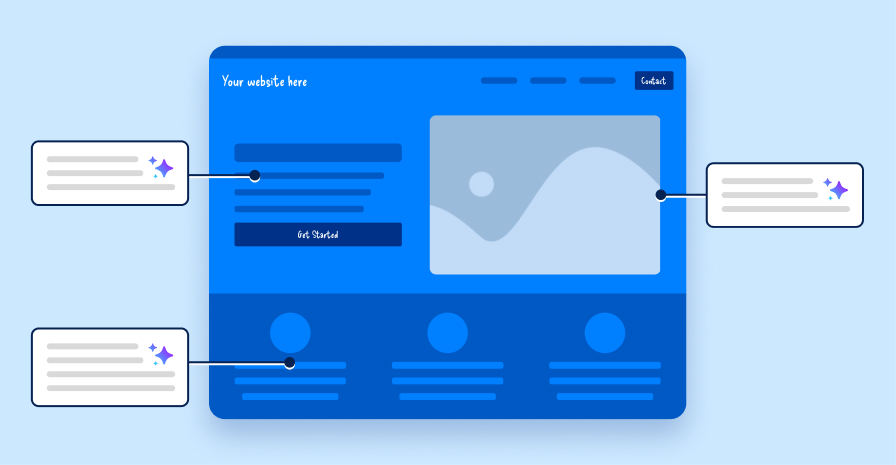
AI systems don’t “trust vibes.” They trust signals.
Here are the ones we see matter most for AI-friendly websites.
Clear, specific pages
One page should answer one main thing. A service page. A location page. A “how it works” page. A pricing page.
If a page tries to cover everything, it usually says nothing clearly.
Straight answers near the top
If someone searches “How much does X cost?” your page should answer that quickly. Not after five paragraphs of brand story.
Pro-Tip: We suggest using the BLUF (Bottom Line Up Front) method. Put the answer in the first 2 sentences. If Google can "clip" your answer easily, you’re more likely to get that 35% CTR boost we discussed.
An AI-friendly website structure
This is the part most SMB sites skip.
Use clean headings that match real questions:
- What you do
- Who it’s for
- What it costs
- What makes you different
- How to get started
That structure helps humans and helps machines parse your content.
Additionally, Schema Markup is key for AI engines to best understand your information.
The "Why:" Schema is the code that tells an AI, "This is a price," "This is a review," or "This is an FAQ." It’s like giving the AI a map instead of making it guess. Think of your site structure as the skeleton and Schema Markup as the labels. Both help AI bots understand your context instantly.
Proof that you’re real
Reviews. Testimonials. Case studies. Photos. Team info. Licenses. Certifications.
If you’re in a trust-heavy space like legal, medical, financial, or high-ticket services, this matters even more.
Also, quick note since people get the wrong idea here. Your website still matters a lot. Even if AI reduces clicks from some organic searches, your site is still your corner of the internet where people verify you, compare you, and decide to contact you.
In 2026, the biggest differentiator between a human-led site and an AI-spam site is First-Person Experience:
- The Signal: AI can't "experience" things. Use words like "In our experience," "We found that," or "When we handled this for a client."
- Visuals: Original photography (not stock photos) is now a massive trust signal for Google’s "Perspectives" and AI Overview tabs.
How AI Evaluates Brand and Entity Authority
Think of “entity authority” like this.
AI tools want to know you are a real business, with a real reputation, and a consistent footprint online.
Here’s how you optimize that for strong entity SEO.
Get your basics consistent everywhere
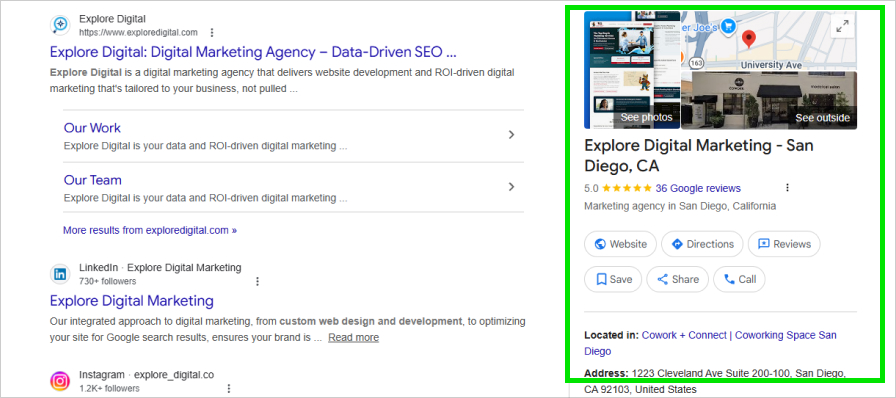
Your business name, address, phone number, and service area should match across your website, Google Business Profile, and key directories.
Write a real About section
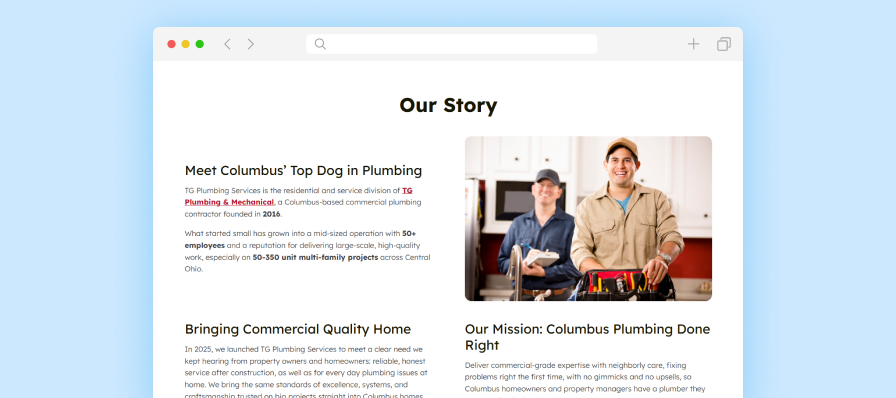
Not fluff. Real specifics.
- Who you are
- What you do
- Who you serve
- Where you operate
- How long you’ve done it
Add author or team credibility where it matters
If you publish advice, show who wrote it and why they’re qualified. Google’s AI features guidance focuses on surfacing helpful information, and clear attribution supports that trust layer.
Why Topical Authority Beats One-Off “AI-Proof” Pages
A lot of people ask, “Should I make one page just for AI?”
No.
One-off pages rarely build trust. AI models assess patterns across entire websites. A single optimized article won’t outperform a site that consistently covers a topic in depth.
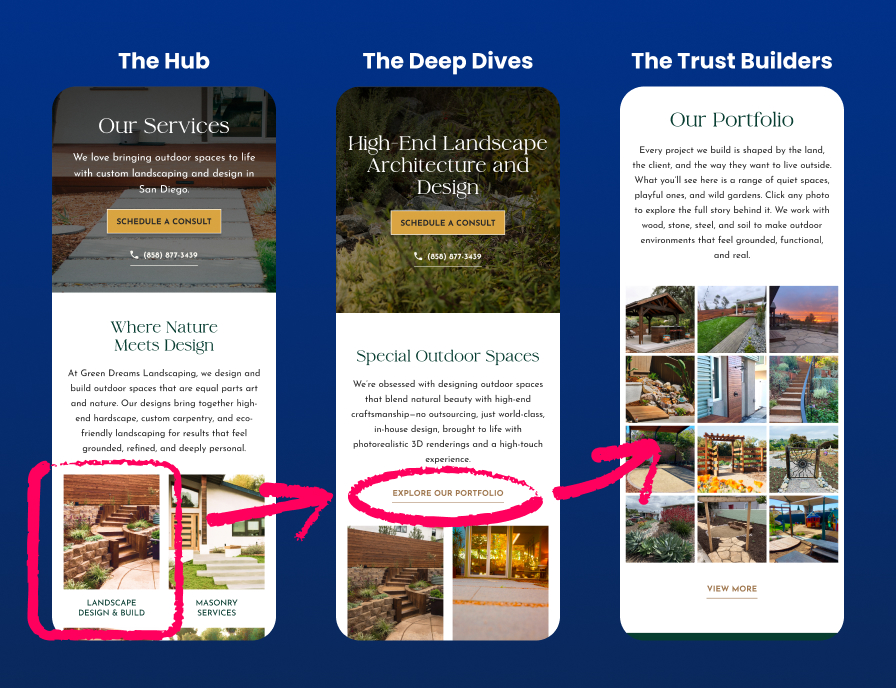
What works best for AI SEO strategy is topical authority. That means you cover a topic well across multiple helpful pages, and you link them together.
Example - The "Landscaper" Authority Map:
- The Hub: Landscape Design-Build Services (The "Big Picture")
- The Deep Dives: Outdoor Kitchens, Retaining Walls, Custom Pools.
- The Trust Builders: Design-Build Process, 2026 Cost Guide, Maintenance Timelines.
The Result: When a user asks an AI, "How much does a retaining wall cost in a design-build project?" Google sees your interlinked ecosystem and identifies you as the Subject Matter Expert.
This is also where AI Overview SEO gets real. AI summaries tend to favor sources that explain a topic clearly and consistently across related pages.
"Internal Link" Tip: Anchor text (the clickable words) between these pages is the "connective tissue" that the AI uses to understand your expertise.
Example: Don't just link "Click here." Link the phrase "comprehensive design-build process" to your process page.
Technical and Structural Optimizations for AI Search
This is the part that feels “technical,” but the goal is simple: Make your site easy to read, crawl, and understand.
Use schema where it fits
Schema is structured data. It helps search engines interpret what your page is about and what entities exist on it.
For SMBs, the basics usually include:
- Organization or LocalBusiness
- Service
- FAQ (when the questions are real and useful)
- Review markup when eligible
Clean up your navigation and internal links
If your services are hard to find, AI systems and humans both struggle.
Publish FAQs that match real questions
Not “What is quality?” Real questions your customers ask on calls.
Consider an LLMs.txt file
This is a newer tactic some sites use to help AI tools understand what sections of a site matter most. It’s not required. But it’s a useful option if you have a lot of content and want to guide what gets read first. You can explore, and download for free, ours here.
Why You’re Invisible to AI Search (The 2026 "No-Fly" List)
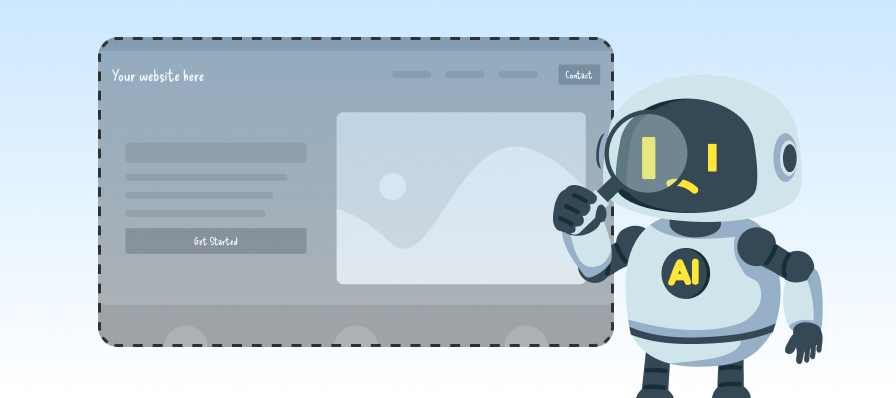
If your brand is missing from the AI Overview, it’s rarely a "glitch." It's usually one of these trust-killers:
- The "Fluff" Factor: Your content is too vague. If an AI can’t find a hard fact, a specific price, or a unique "how-to" step in the first 200 words, it moves on.
- The "Thin Page" Trap: You have service pages with 100 words and a "Contact Us" button. AI needs substance to summarize.
- The "Vague Heading" Bug: Your headings are "creative" instead of "functional." (e.g., Using "Our Philosophy" instead of "How Our Landscaping Process Works").
- The "Ghost Town" Effect: No reviews, no case studies, no "Real Human" signals. If the AI can’t verify you’re a real business with happy humans, it won't risk recommending you.
- The "Identity Crisis:" Your business name or phone number is different on Facebook than it is on your footer. To an AI, inconsistent data equals an unreliable source.
Fixing these is not glamorous. But it works if you want better AI visibility.
How to Measure AI Search Visibility
You won’t track AI search visibility with one perfect number. Use a few simple signals instead.
Start with the basics
- More searches for your brand name
- More direct traffic
- More calls and form fills that reference “I saw you on Google” or “I found you through AI”
Spot-check your main queries
Once a month, search your main services and check:
- Are you referenced in AI answers?
- Are competitors referenced?
- Which pages are being pulled in?
Use tools if you want automation
If you’re ready to track this more seriously, tools like SEMrush and SE Ranking now offer AI search visibility features. Newer platforms like Gumshoe focus specifically on AI mentions.
And if you want the biggest upside from the traffic you already get, pair visibility tracking with conversion work. That’s where conversion rate optimization pays off fast.
The 2026 AI Search Optimization Checklist for SMBs
Copy, paste, or screenshot this. If you check these boxes, you’re ahead of 90% of your competition.
- [ ] The "One-to-One" Rule: Every core service has its own dedicated, deep-dive page. (No more "Services" pages that are just a list of bullets).
- [ ] The "10-Line" Answer: Your main answer or "BLUF" (Bottom Line Up Front) is in the first 10 lines of the page. Make it easy for the AI to clip.
- [ ] Functional Headings: Use H2s and H3s that mirror the exact questions your customers ask (e.g., "How long does a roof replacement take?" vs. "Our Efficient Process").
- [ ] The FAQ Power-Up: Add an FAQ section using Schema Markup. This is the most direct way to feed "Question-and-Answer" pairs to an AI model.
- [ ] Human-First Proof: High-res original photos (not stock), embedded Google Reviews, and specific case studies. AI looks for "Real-World Signals."
- [ ] The "Identity" Lock: Ensure your Business Name, Address, and Phone (NAP) are identical on your website, Google Map, and social profiles.
- [ ] Topical "Spiderwebs": Link your blog posts to your service pages using descriptive text. If you write about "Best Grass for Shade," link it back to your "Lawn Care Services" page.
- [ ] The "Speed & Mobile" Floor: If your site takes 5 seconds to load on a 4G connection, the AI crawler may deprioritize you as a "poor user experience" source.
- [ ] Authority Pillars: Don't just post once. Publish 3–5 supporting articles around your main topic to prove to the AI that you are a Topical Authority.
- [ ] The "Audit" Loop: Every 30 days, Google your main services. If an AI Overview appears, check the "Sources" on the right. If you aren't there, see what the cited sites have that you don't.
If you want how to get your website into AI search results to turn into leads, not just impressions, this is the playbook.
Ready to make your site show up where people search now?
AI search rewards websites that are easy to understand, helpful, and trustworthy. It’s no longer just about ranking high, it’s about clearly explaining what you do and why you’re a good source.
Explore Digital helps businesses do exactly that. We build clear websites, write content that answers real questions, and create strategies that work for both people and AI. On a strategy call, we’ll review your website, show you how AI sees it, and outline clear next steps to improve visibility and results.
So if you want a clear plan for AI search optimization, we’ll help you figure out what to fix first and what’s not worth your time.
FAQs
1. What is AI search optimization?
AI search optimization, often referred to as Generative Engine Optimization (GEO), is the work of making your website easy for AI tools to understand and reference. It overlaps with SEO, but it puts extra weight on clarity, structure, and trust.
2. Can my small business actually show up in AI results?
Yes. Small businesses show up when their sites are clear, specific, and credible. In many local categories, clear service pages and strong reviews do a lot of heavy lifting.
3. Do I need to rewrite my whole website for AI?
No. Start with your money pages. Your core services, top locations, pricing, and FAQs. Tighten those first, then expand.
4. How does AI decide which sites to cite?
It favors sources that are clear, consistent, and trustworthy. That usually means strong topical coverage, clean structure, and visible proof.
5. Do keywords still matter?
Yes. AI tools still need language clues. Use the words your customers use. Work your primary terms in naturally, like “AI search optimization” and service-specific phrases and related terms.
Example: If you’re talking about "Landscaping," make sure you mention "Hardscaping," "Drainage," and "Irrigation." The AI uses these "neighborhood words" to confirm you’re an expert.
6. What is GEO SEO and does it matter?
GEO SEO is short for Generative Engine Optimization. It’s the idea of optimizing content so AI systems can summarize it well. The concept is new, but the core tactics are familiar: clarity, structure, and credibility.
GEO is the bridge between SEO (ranking for clicks) and AEO (Answer Engine Optimization, ranking to be the answer).
7. Is schema required for AI visibility?
Not required, but helpful. Schema gives search engines clean context about your business and your pages.
8. Should I create content just for AI tools?
Create content for people first. Then structure it so machines can read it cleanly. One-off “AI pages” usually underperform compared to simple, helpful content clusters.
9. How long does it take to see results?
Some changes help fast, like clearer service pages and better FAQs. Others compound, like topical authority. Either way, you’ll usually see early signals in branded searches and lead quality before you see big traffic lifts.
10. How do I know if my site is AI-friendly?
If a first-time visitor can understand what you do, who you serve, and how to contact you in under 30 seconds, you’re close. If they can’t, AI tools will struggle too.
Try the Copy-Paste Test: If you can copy a paragraph from your site and it makes perfect sense on its own without the rest of the page, it’s AI-friendly. AI models love "standalone" facts.