Written by Explore Digital
If your organic traffic is down, it doesn’t automatically mean your SEO is failing.
That’s the part business owners need to hear first.
Google Search is changing. Search results are more crowded than they used to be. AI Overviews, paid ads, map packs, shopping results, videos, images, social content, and other features can all reduce clicks to traditional organic listings.
So yes, your website traffic from Google may drop even if your rankings haven’t fallen in the way you expected.
That doesn’t mean you should ignore the drop. It means you need to understand what changed, where it changed, and whether it’s actually hurting leads, calls, form fills, sales, or visibility.
Traffic matters. But traffic alone doesn’t tell the whole story anymore.
What Are AI Overviews?
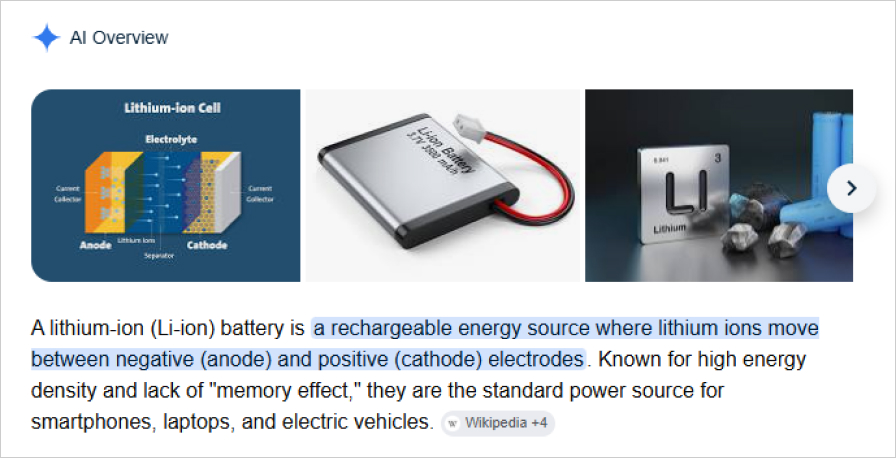
AI Overviews are AI-generated summaries that can appear in Google Search results for certain searches.
Instead of only showing a list of traditional links, Google may summarize an answer directly on the results page and include links for users who want to keep reading. For the user, that can make search feel faster. For businesses, it can change how often people click through to a website.
Google’s own guidance on AI features and your website says there aren’t special technical requirements to appear in AI Overviews or AI Mode beyond the standard SEO fundamentals: make sure your pages are crawlable, indexable, useful, and eligible to appear in search.
So this isn’t a “throw out everything you know about SEO” situation.
It’s more like this: SEO still matters, but the way people move from search to website is getting less direct.
If you want the deeper tactical side of this, we’ve covered it in our guide to getting your company website into AI search results. This article is about a different issue: how to interpret traffic changes when the search results themselves are changing.
Why AI Overviews Can Lower Website Traffic
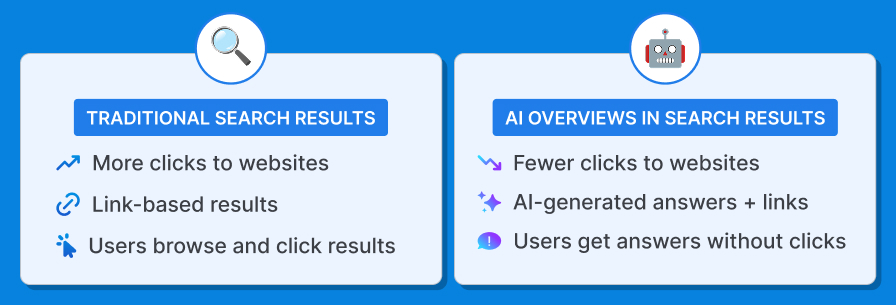
AI Overviews can lower website traffic because some users get enough information without clicking.
That’s especially true for broad informational searches. Think searches like:
- “What is an AI Overview?”
- “How does SEO work?”
- “Benefits of email marketing”
- “What is conversion rate optimization?”
- “Difference between SEO and PPC”
Those searches can still matter. They help build awareness. They can support trust. They can introduce someone to your brand early.
But they’re also easier for Google to summarize directly.
Pew Research found that users who saw an AI summary clicked a traditional search result in 8% of visits, compared with 15% of visits when no AI summary appeared.
That’s a real change.
But it doesn’t mean every lost click was a lost customer.
Some of those clicks may have come from people doing early research. Some may have been low-intent visitors who weren’t ready to buy, call, book, or submit a form. Some may have been looking for a quick definition and nothing else.
That distinction matters.
A drop in informational blog traffic can look scary in GA4. But if your leads, calls, local visibility, branded searches, and high-intent page performance are steady, your SEO may still be doing its job.
AI Overviews Are Only Part of the Story
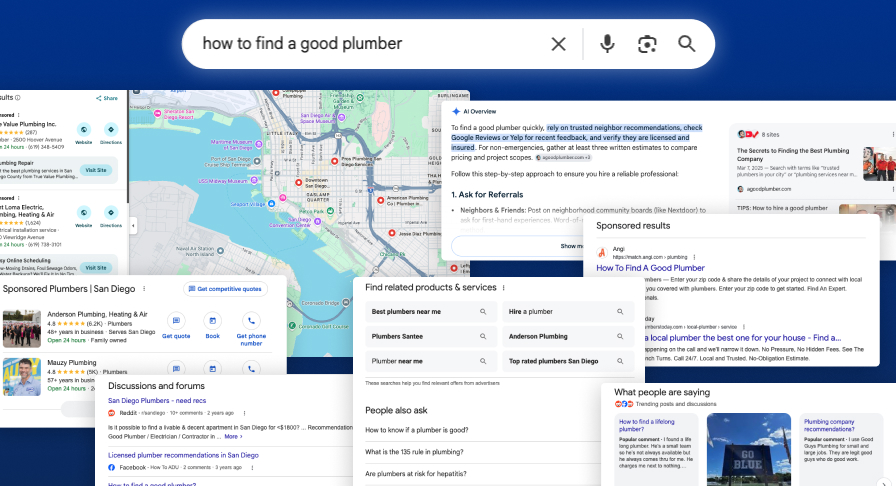
AI Overviews get a lot of attention, but they’re only one part of why organic traffic may drop.
Google results are more crowded across the board.
A search results page may include:
- Paid search ads
- Shopping results
- Local map packs
- AI Overviews
- Videos
- People Also Ask boxes
- Image packs
- Reddit or forum results
- Social content
- Review snippets
- Product listings
- Knowledge panels
Traditional organic links still matter. But they’re no longer the only thing on the page.
That means your website can rank well and still receive fewer clicks.
For example, you might still hold a strong organic position for an important keyword, but that result now sits under ads, a map pack, an AI Overview, and a video carousel. Your “ranking” may look stable in a report, while your click-through rate drops because the actual search results page has changed.
That’s why the better question is no longer just, “Where do we rank?”
The better question is, “Where do we show up across the full search results page?”
That shift is a big part of why we’ve said SEO isn’t dying — it’s splintering into layers. Search visibility now lives in more places than the classic list of organic results.
Paid Listings Are Becoming Part of AI Search

There’s another layer here: paid listings are becoming part of the AI search experience too.
Google announced that Search and Shopping ads in AI Overviews were expanding to desktop in the U.S. Google’s Ads Help documentation also explains that ads can appear above, below, or within AI Overviews when they’re relevant to the query and AI response.
That matters because organic results are now competing with both AI-generated answers and paid placements.
This isn’t limited to traditional Google Ads at the top of the page. Google is testing and expanding ad experiences that fit into more conversational, AI-assisted search journeys.
Semrush reported that Google Ads appeared on 25.56% of search results that included AI Overviews by October 2025, up from 5.17% in March 2025.
For business owners, the takeaway is simple: search is getting more competitive for attention.
That doesn’t mean paid search replaces SEO. It means SEO and PPC need to work together more thoughtfully. If an important keyword is crowded with AI results, ads, shopping units, and other features, you need to decide how to stay visible without wasting budget.
That’s where a connected marketing strategy matters more than channel-by-channel guessing.
Why Lower Traffic Doesn’t Always Mean SEO Is Failing
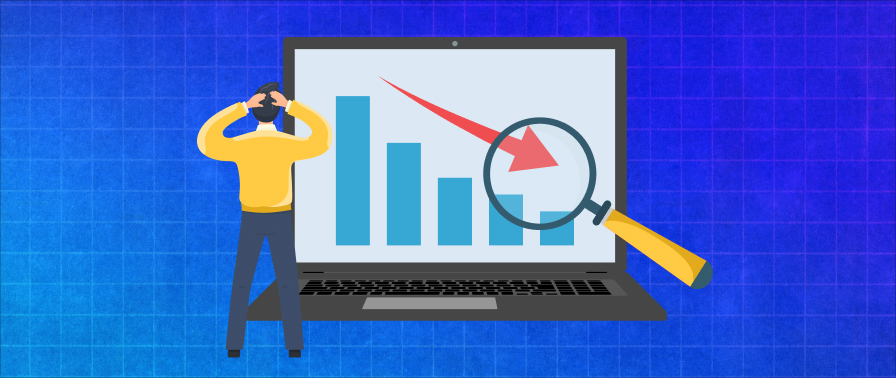
A traffic drop can be a real problem.
It can also be a reporting signal that needs context.
Before you assume SEO is failing, look at what dropped.
Did all organic traffic drop? Or did traffic mainly fall on older blog posts? Did high-intent service pages lose visibility? Did branded searches decline? Did Google Business Profile actions drop? Did form submissions fall? Did phone calls slow down?
Those are very different problems.
If rankings are stable, impressions are steady, and leads are still coming in, the issue may be lower click-through from a more crowded SERP. That’s not the same thing as broken SEO.
Organic traffic decline can happen for several reasons:
- AI Overviews answer more informational searches directly.
- Ads push organic listings lower.
- Map packs absorb local intent.
- Shopping results pull clicks away from standard listings.
- Video and social results take more SERP space.
- Search behavior changes seasonally.
- A core update changes which pages Google rewards.
- A technical issue affects crawling, indexing, or tracking.
- Old content loses relevance.
- Competitors improve their pages.
Some of those are SEO problems. Some are search behavior problems. Some are reporting problems.
That’s why we don’t recommend judging SEO by sessions alone.
A site can lose low-intent traffic and still generate better-qualified visitors. It can get fewer total clicks but more calls. It can lose blog traffic while service pages continue to support revenue.
That’s the difference between traffic loss and performance loss.
Which Pages and Keywords Are Most at Risk?
The pages most likely to lose traffic are usually the ones that answer quick, broad questions.
These often include:
- Glossary-style blog posts
- Basic “what is” articles
- Simple how-to posts
- Short FAQ pages
- Broad educational content
- Definition-based content
- Generic top-of-funnel blogs
Those pages can still serve a purpose. They can build topical authority. They can support internal links. They can help people discover your brand early.
But they’re more vulnerable because AI Overviews can answer many of those searches directly.
Pages with stronger buying intent are usually more durable.
Those include:
- Service pages
- Local landing pages
- Pricing pages
- Comparison pages
- Case studies
- Product pages
- Review-driven pages
- Contact-focused landing pages
- Pages built around a specific problem and solution
Why? Because those searches need more than a quick answer.
AI can explain what something means. But a customer still needs to decide who to trust, what to buy, where to book, which provider fits, and what the next step should be.
That’s where your website still matters.
We’ve said this before, and it’s even more true now: websites aren’t dying — they’re becoming more important. They’re your proof center. Your trust hub. Your conversion path. Your place to show why someone should choose you instead of the other options Google shows them.
A helpful way to think about it:
AI Overviews may answer, “What does this mean?”
Your website still needs to answer, “Why should I choose you?”
SEO Visibility Now Goes Beyond the 10 Blue Links
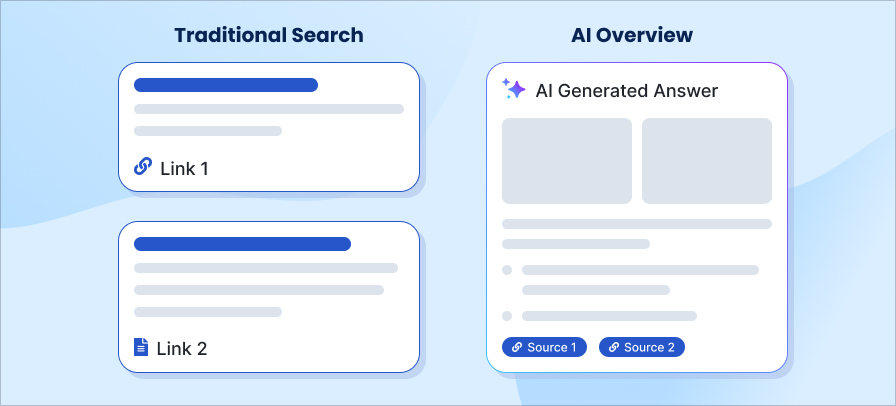
The old model of SEO was simpler.
Rank higher. Get more clicks. Grow traffic.
That still happens, but it’s not the whole picture anymore.
Search visibility can now come from:
- Traditional organic rankings
- AI Overview citations
- Local map pack rankings
- Google Business Profile actions
- YouTube videos
- Image results
- Social profiles
- Merchant Center listings
- Product feeds
- Partner backlinks
- Review content
- Directory listings
- PR mentions
- Forum or community discussions
- Branded search demand
The right mix depends on the business.
An ecommerce brand may need better Merchant Center visibility, stronger product feeds, and sharper product page content. A local service business may need stronger map pack visibility, more review-informed FAQs, and better service area content. A B2B company may need thought leadership, partner mentions, case studies, and stronger comparison content.
This is why SEO can’t live in a silo.
Your website needs to support search, trust, and conversion. Your content needs to answer real buyer questions. Your paid strategy needs to account for the search results you’re actually competing in. Your reporting needs to show more than “traffic went up” or “traffic went down.”
The full search results page is now the playing field.
What Businesses Should Do Instead of Chasing Traffic Alone
If organic clicks are harder to earn, the answer isn’t to panic or chase every AI trend. The better move is to strengthen the full digital ecosystem around your brand. That means improving the parts of your marketing that help people find you, trust you, and take action.
Start with the pages closest to revenue.
Make sure your service pages, product pages, local pages, and contact paths are clear, specific, and useful. If those pages are vague, thin, or hard to use, more traffic won’t fix the real problem.
Then look at your content.
Do your blogs answer questions your customers actually ask? Do they link naturally to helpful next steps? Do they support your services? Do they add a useful perspective, or do they sound like the same generic explanation someone could get anywhere?
Then look outside your site.
Do you have partner backlinks? Local citations? Reviews? Case studies? Videos? Social profiles that show up in search? Mentions from trusted sources? A Google Business Profile that reflects what you actually do?
Then look at conversion.
When fewer qualified visitors make it to the website, each visit matters more. That’s why conversion rate optimization has become more important, not less. If your site already earns search visibility, CRO helps you get more value from the traffic you already have. That can mean clearer calls to action, better page layouts, stronger proof, simpler forms, faster load times, better mobile usability, or sharper messaging.
In plain English: don’t just chase more visitors. Make the right visitors more likely to become leads or customers.
What Metrics Matter More Than Traffic Now?
Traffic still matters.
But it shouldn’t be the only SEO metric you use to judge performance.
To understand whether SEO is helping the business, track metrics like:
- Organic conversions
- Form submissions
- Phone calls
- Bookings
- Purchases
- Conversion rate
- Branded search demand
- High-intent keyword rankings
- Google Business Profile calls and direction requests
- Local pack visibility
- Search Console impressions
- Click-through rate
- Assisted conversions
- Engagement quality
- AI referral traffic
- Visibility in SERP features
Google says traffic from AI Overviews and AI Mode is included in Search Console’s Performance report under the Web search type. That means Search Console is still useful, but it won’t always isolate AI-driven visibility in the way marketers want.
So you’ll need to look at multiple sources.
In GA4 or Looker Studio, it’s also worth creating a separate view for AI referral traffic from tools like ChatGPT, Gemini, Copilot, Perplexity, and other AI platforms. That traffic may be small right now for many businesses. But tracking it early gives you a baseline. If AI-driven discovery becomes a larger source of qualified traffic later, you’ll want to know when that starts happening.
Why SEO, PPC, CRO, and Content Need to Work Together
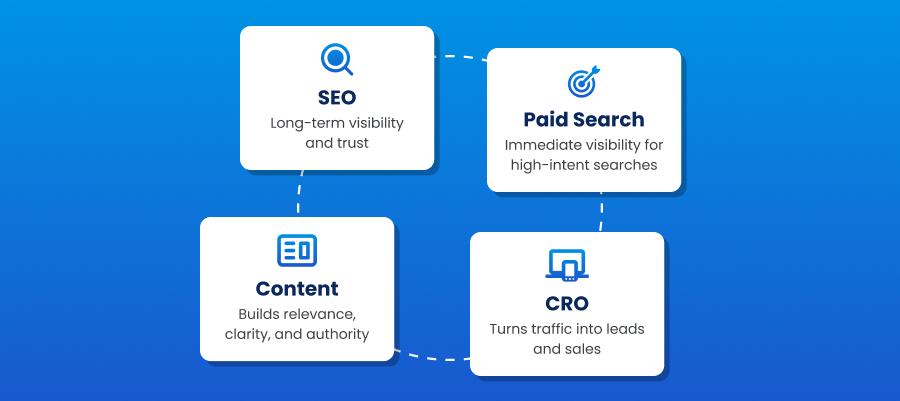
Once you know what changed, the next step is getting the right teams and channels pointed at the same goal.
SEO, PPC, CRO, and content can’t operate like separate projects anymore. Search results are too blended for that.
SEO supports long-term visibility, authority, trust, and local presence.
Paid search can help you stay visible for competitive, high-intent searches where organic listings are pushed lower by ads, AI Overviews, map packs, or other SERP features.
CRO helps make sure the traffic you do earn turns into leads or sales.
Content supports all of it. It answers customer questions, builds trust, improves relevance, supports internal links, and gives both people and search engines a clearer understanding of what you do.
When these channels are disconnected, reporting gets messy fast. SEO says traffic is down. PPC reports say cost per click is up. Website reports say leads are flat. Nobody knows what to do because everyone is looking at one piece of the puzzle. And so the team ends up reacting to symptoms instead of solving the real problem.
A connected strategy makes better decisions possible.
That might mean you refresh old informational content but prioritize high-intent service pages. Or maybe you use paid search to protect a competitive keyword while SEO builds authority. Maybe you improve landing page conversion before increasing ad spend. Maybe you add review-based FAQs because customers keep asking the same questions before booking.
Traffic changes shouldn’t trigger random channel fixes. They should trigger a coordinated look at visibility, intent, conversion, and revenue.
How to Respond to an Organic Traffic Drop
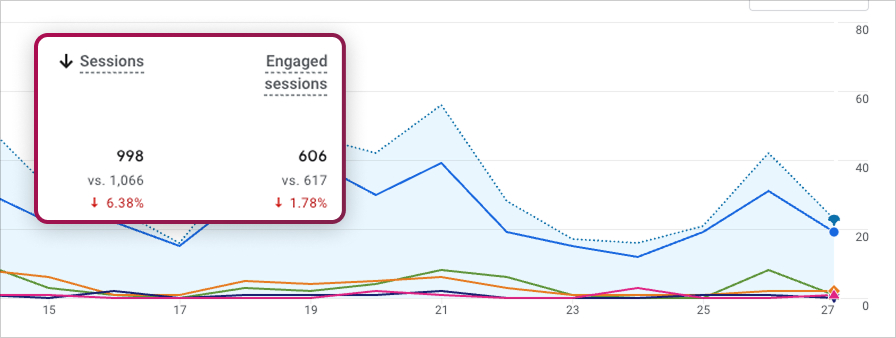
Start by diagnosing the drop before changing the strategy.
Here’s the practical order we’d use.
1. Identify what dropped
Look at which pages, queries, locations, and devices lost traffic. Don’t stop at the sitewide organic number. A drop on old informational blogs means something very different from a drop on service pages or local landing pages.
2. Compare traffic against business outcomes
Look at clicks, impressions, rankings, calls, form submissions, bookings, purchases, and conversion rate. If clicks dropped but impressions and rankings are steady, the SERP may have changed. If impressions fell too, visibility may be the issue. If conversions dropped harder than traffic, the problem may be lead quality, conversion friction, or page performance.
3. Look at the actual search results
Search the affected keywords. See what appears above or around your listing. Is there an AI Overview? More ads? A map pack? Shopping results? A video carousel? Reddit results? A competitor with better content?
4. Separate search-result changes from SEO problems
If rankings and impressions are steady but clicks are down, the SERP may be taking more of the attention. If impressions dropped, visibility may be the issue. If conversions dropped, the website experience may need attention.
5. Match the fix to the problem
That may mean:
- Refreshing outdated content
- Improving internal links
- Adding stronger calls to action
- Building more specific service pages
- Strengthening local SEO
- Creating review-informed FAQs
- Improving page speed or mobile usability
- Adding stronger proof and case studies
- Building partner backlinks
- Testing paid search on high-intent terms
- Improving CRO on key pages
- Tracking AI referral traffic
The goal isn’t to chase “LLM optimization” as its own thing. The goal is to understand what changed, protect the pages closest to revenue, and keep building visibility across the places your customers are actually searching.
Traffic Is a Signal, Not the Whole Story
AI Overviews, paid ads, and crowded SERP features may reduce organic clicks.
But lower traffic doesn’t always mean SEO is broken.
The real question is what kind of traffic dropped, what changed in the search results, and whether your business is still earning visibility, trust, and qualified leads.
That’s the shift.
Traffic is a signal. It’s not the full story.
If your organic traffic is down and you’re not sure whether it’s an SEO problem or a search results shift, we can help you make sense of the data.
Request a strategy call and we’ll look at what changed, what still works, and where the next best growth opportunities are.
Frequently Asked Questions
1. Can AI Overviews lower my website traffic?
Yes. AI Overviews can reduce clicks when users get enough information directly from the search results. This is most common with broad informational searches where the user only needs a quick answer.
2. Does lower organic traffic mean my SEO is failing?
Not always. If traffic drops from low-intent informational pages but leads, calls, rankings, and conversions stay steady, your SEO strategy may still be supporting the business well.
3. Are paid ads also affecting organic website traffic?
Yes. Organic traffic can be affected when paid ads, shopping results, map packs, AI Overviews, and other SERP features appear above or around traditional organic listings. Google has also expanded ads into AI Overview and AI Mode experiences.
4. Can my rankings stay the same while traffic goes down?
Yes. Your page may still rank well, but receive fewer clicks if the search results page now includes ads, an AI Overview, map results, videos, shopping units, or other features above it.
5. What types of searches are most affected by AI Overviews?
Informational searches are usually the most affected. Queries that start with “what is,” “how does,” “why does,” or “benefits of” are more likely to be answered directly in search results.
6. Are service pages still important if AI Overviews answer questions?
Yes. Service pages are still important because users often need more detail before choosing a company. They want to compare services, review trust signals, understand pricing, check locations, and decide whether to reach out through a strong website experience.
7. Should I stop writing blog content?
No. Blog content still helps build topical authority, answer customer questions, support internal linking, and reach users earlier in the buying process. The strategy may need to shift toward more specific, useful, and conversion-supporting content.
8. Should I track traffic from ChatGPT, Gemini, Copilot, and other AI tools?
Yes. AI referral traffic may be small now, but it’s worth tracking in GA4 or Looker Studio. Creating a separate AI traffic section gives your team a baseline and helps you monitor whether these platforms begin sending more qualified visits over time.
9. Should businesses focus on LLM optimization?
Businesses don’t need to chase LLM optimization as a totally separate strategy. In most cases, the better approach is to keep doing strong SEO: create helpful content, answer real customer questions, build authority, improve technical SEO, strengthen brand signals, and make the website easier to use. For more context, read our guide to Generative Engine Optimization.
10. How can businesses make up lost organic visibility?
Businesses can look for visibility opportunities beyond traditional organic rankings. That may include local pack optimization, YouTube content, social search, Merchant Center listings, partner backlinks, review-based FAQs, and stronger conversion paths on key landing pages.
11. Should I invest in paid search if organic clicks are declining?
For some businesses, yes. Paid search can help protect visibility on high-intent keywords where organic listings are being pushed lower. SEO is still important for long-term growth, but paid search can support visibility in more competitive SERPs as part of a broader digital marketing strategy.
12. How can Explore Digital help with AI-related traffic changes?
We can review your SEO data, identify which pages or keywords are changing, and help separate normal SERP shifts from true SEO performance issues. From there, we can improve content, strengthen conversion paths, track AI referral traffic, and build a smarter SEO and paid search strategy.